
XLOOKUP vs VLOOKUP: Key Differences, Examples, and Which One Is Better?
Finding one piece of information in a spreadsheet shouldn’t feel like searching for a needle in a digital haystack. Yet […]
Read article →A practical guide to artificial intelligence games, from pathfinding and adaptive difficulty to generative characters, risks, privacy, and the future of game AI.

Artificial intelligence games are games in which computer-controlled systems perceive what is happening, make decisions, adapt to players, generate content, or support development. AI is not new to gaming: pathfinding, tactical behavior, difficulty adjustment, and procedural generation have shaped games for decades. What is changing now is the arrival of generative models, conversational characters, and agents that can learn broader actions from language and observation.
This guide explains the major types of game AI, how modern systems work, what they can improve, where the limitations are, and what players, parents, creators, and studios should check before choosing an AI-powered experience.
Game AI is an umbrella term. It can describe a small rule-based system that chooses an enemy’s next move or a large model that generates dialogue. Unlike a general-purpose assistant, game AI usually operates inside a carefully designed world with defined goals, actions, and performance constraints.
The most common layers include:
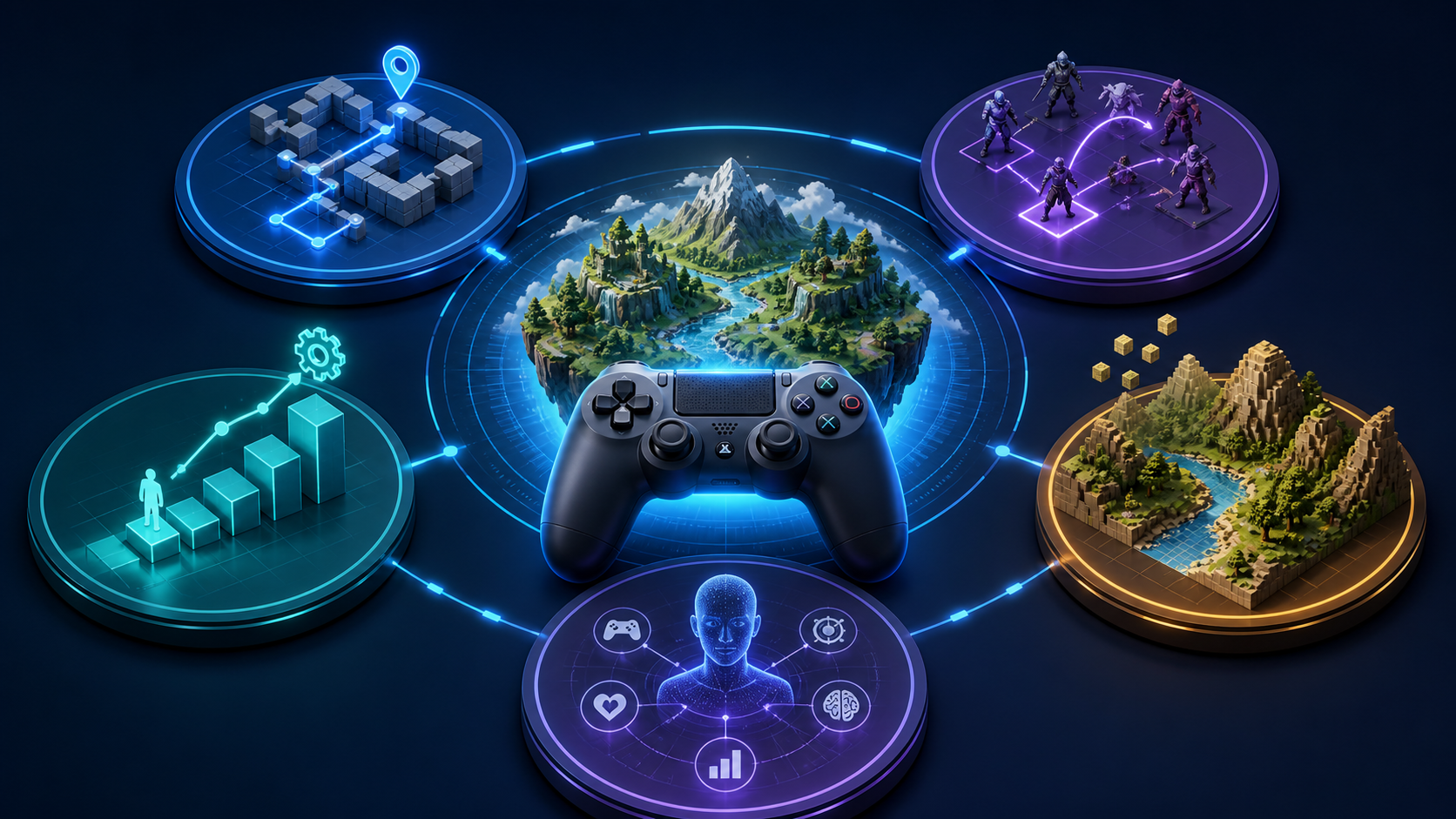
Many effective game characters do not use machine learning. Designers often build finite-state machines, behavior trees, utility systems, planners, and scripted encounters because these methods are fast, predictable, and easy to tune. A guard might patrol, investigate a sound, chase a player, and return to patrol according to explicit states and transitions.
Pathfinding commonly uses graph-search methods to choose a route over a navigation mesh. Utility systems score possible actions—heal, retreat, attack, take cover—then choose the best option for the current situation. Directors or pacing systems can change encounter intensity based on recent player performance.
These systems create the appearance of intelligence while keeping the experience fair and authored. Predictability is often a feature: players need to learn rules, anticipate consequences, and trust that success reflects understandable mechanics.
Generative models can expand the range of language, animation, concept art, code suggestions, voices, and world variations available to developers. In a character system, a language model may receive the player’s words, the character’s identity, current quest state, approved world knowledge, and recent memory. Its response then passes through safety rules and production systems before becoming text, voice, facial animation, or an action.
NVIDIA ACE, for example, is presented as a collection of technologies for digital human and game-character interactions, including speech, intelligence, and animation components. Unity AI focuses on tools that assist creators inside the development workflow. These products do not replace game design; they provide components that studios must constrain, test, integrate, and monitor.
Generative AI can also support pre-production by helping teams explore dialogue alternatives, prototype mechanics, summarize playtest notes, or create temporary assets. Final commercial use still requires human direction, legal review, quality control, accessibility checks, and consistency with the game’s art and narrative.
A research direction beyond dialogue is the generalist game agent. Google DeepMind’s SIMA research explored an agent that follows natural-language instructions across multiple 3D environments using visual input and keyboard-and-mouse actions. The goal is broader interaction rather than mastery of a single game score.
Research agents are not the same as a finished consumer feature. They can fail unfamiliar tasks, misread context, or act inconsistently. Still, the work suggests future possibilities for more capable companions, accessibility aids, automated testing, and characters that understand a wider vocabulary of player intentions.
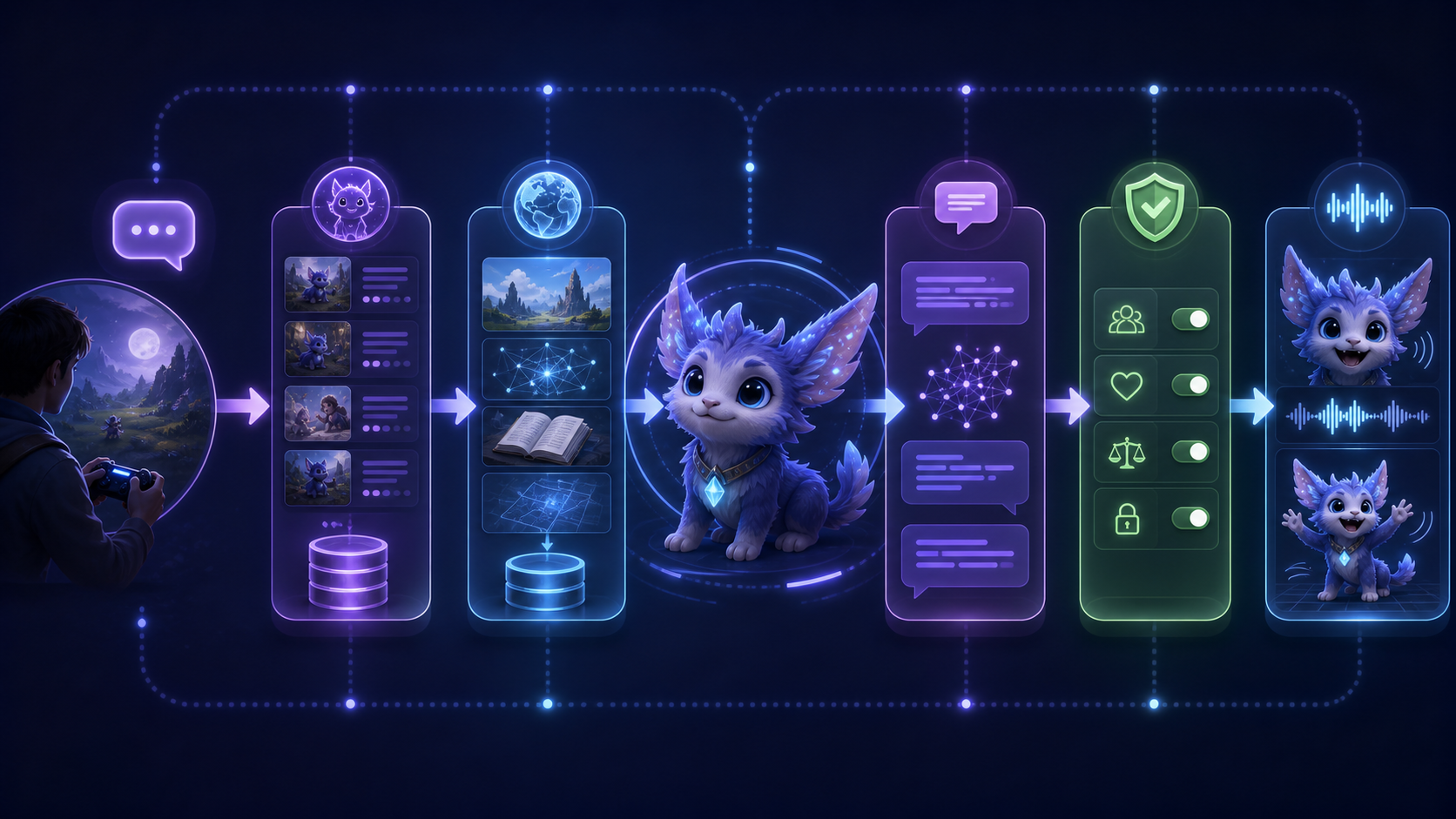
Characters can react to a wider variety of questions and remember selected events. When carefully implemented, this can make exploration feel personal without breaking the game’s goals.
A system can offer hints based on repeated difficulty, simplify controls, adjust text or speech, or help a player learn mechanics at a comfortable pace. Adaptation should be transparent and optional so it does not secretly manipulate difficulty or spending.
Procedural missions, changing environments, and alternate character responses can make repeated play feel fresh. The best implementations use constraints to preserve quality instead of treating unlimited generation as a substitute for design.
Improved planning and player modeling can make companions more useful and opponents less repetitive. Fairness still matters: an AI opponent should not use information the player could not reasonably access unless the rules clearly allow it.
AI-assisted tools can shorten prototyping, automate repetitive testing, detect unusual player paths, generate variations for review, and help small teams explore ideas. A studio might use agents to run thousands of test sessions, identify navigation failures, or verify that a tutorial can be completed.
However, speed in one task can create work elsewhere. Generated dialogue needs narrative review. Generated art needs provenance and consistency checks. Automated code needs security testing. Player telemetry needs consent, minimization, and retention controls. The value comes from a well-designed workflow, not from adding AI to every production step.
A generative character may contradict established story facts, reveal information too early, repeat itself, or respond inappropriately. Developers need retrieval from approved lore, response boundaries, fallback lines, logging, and a way to update controls after launch.
AI features may process voice, chat, behavioral telemetry, or inferred preferences. Players should know what is collected, whether it leaves the device, how long it is retained, and how to delete it. Children’s experiences require especially careful age-appropriate design and consent.
Open-ended chat can invite harassment, attempts to bypass rules, or harmful role-play. Filters alone are insufficient. Teams need adversarial testing, reporting tools, rate limits, community moderation, and human escalation.
Cloud-generated responses can be slow or unavailable, and cost grows with usage. Games need graceful fallbacks so a network problem does not break a quest or remove a purchased feature.
Studios must verify training-data claims, licenses, performer agreements, voice rights, generated-asset provenance, and regional rules. Human creators should remain responsible for the game’s final direction and quality.

For people exploring interactive AI beyond games, conversational systems such as ChatGPT demonstrate natural-language interaction, while research tools such as NotebookLM show how grounding responses in selected sources can improve context. Game developers apply similar concepts under much tighter constraints for lore, actions, age suitability, performance, and fairness.
When comparing products, focus on the specific mechanic rather than a broad “AI-powered” label. A beautifully tuned behavior tree may create a better game than an unconstrained language model, and a small local model may be more responsive than a larger cloud system.
Near-term progress is likely to be practical: better testing agents, more natural companion dialogue, improved animation pipelines, accessibility support, and tools that help designers search and edit large game projects. Longer term, agents may understand broader goals across unfamiliar worlds and collaborate with players in more flexible ways.
The strongest games will still depend on human taste, pacing, level design, art direction, performance, and a coherent point of view. AI can expand the toolkit, but it cannot decide what an experience should mean to its audience.
It is the collection of systems that control navigation, decisions, adaptation, generation, player modeling, testing, or conversational behavior inside games and game-development workflows.
No. Most games rely heavily on rules, scripts, state machines, behavior trees, planners, and utility systems. Generative models are a newer option for selected dialogue and content tasks.
Yes, systems can adjust hints, pacing, challenge, or content using player behavior. Good adaptation is transparent, respects privacy, and can be disabled when appropriate.
Safety depends on the implementation. Parents and developers should examine age ratings, chat controls, moderation, privacy, reporting, and whether open-ended responses can be disabled.
AI is more likely to change specific tasks than replace complete teams. Successful games still require human creative direction, engineering, design, testing, legal review, performance work, and community care.
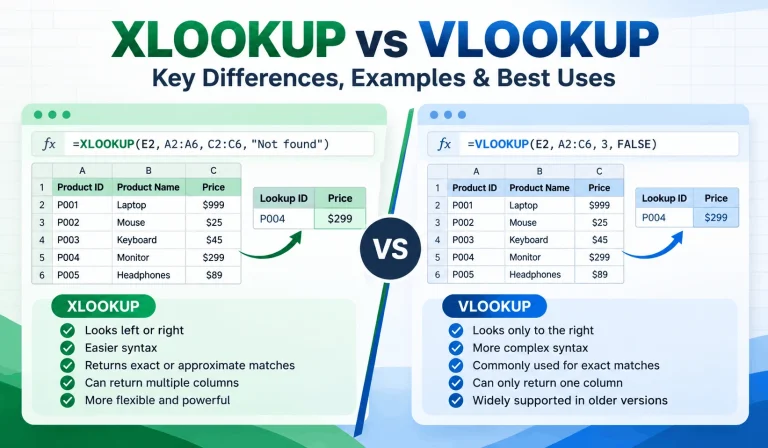
Finding one piece of information in a spreadsheet shouldn’t feel like searching for a needle in a digital haystack. Yet […]
Read article →
Ever spent 20 minutes searching for an AI conversation that took only two minutes to write? You’re not alone in […]
Read article →
Thinking about changing your hair color but worried you might regret it? We’ve all seen a gorgeous hair shade on […]
Read article →